

Subtotal $0.00


101
Draw format and seeded teams
Seed separation rules
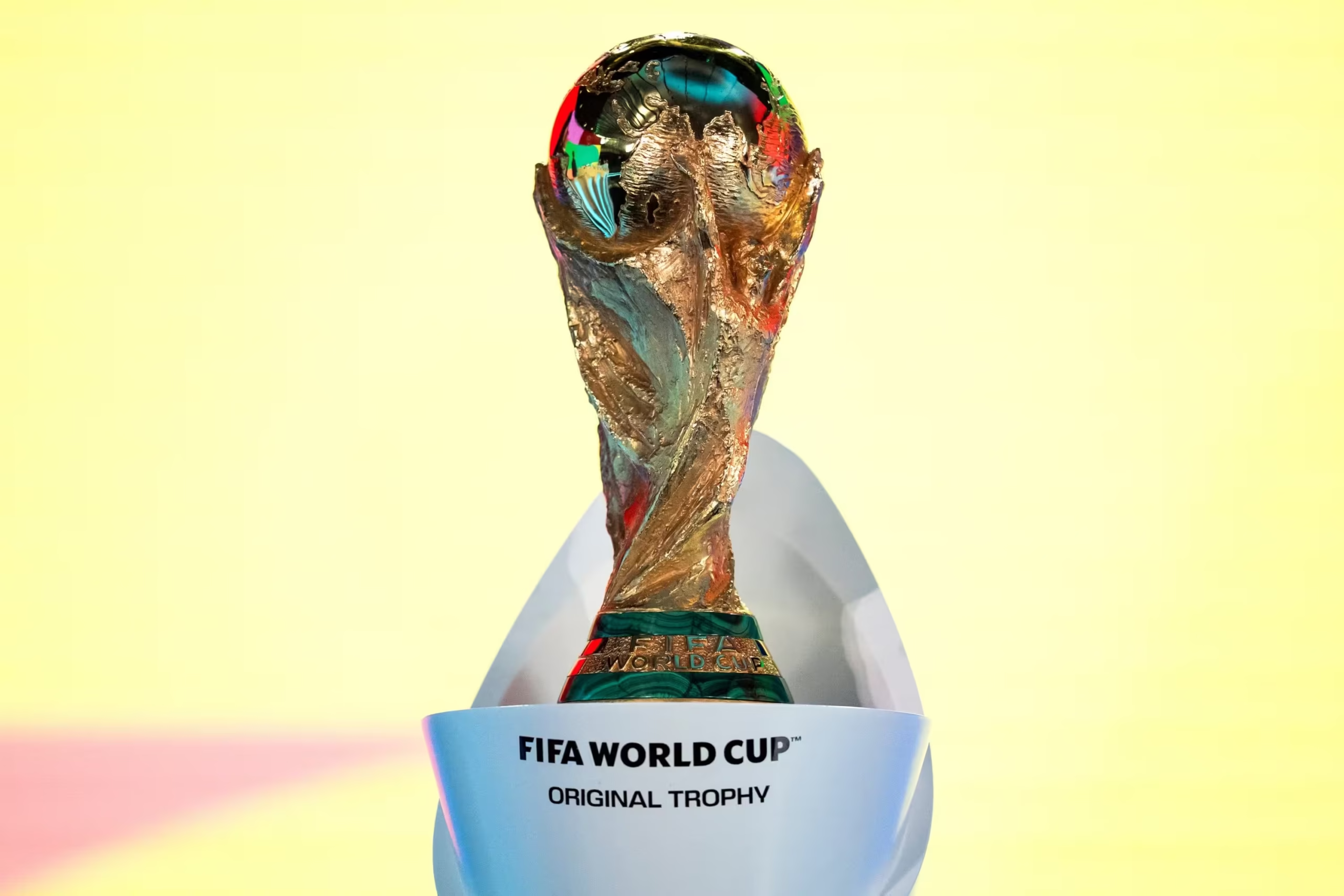
The World Cup 2026 draw is fast approaching, with the draw scheduled for December 5 in Washington. FIFA has published a formal procedure designed to keep the top seeds apart during the group stage. This means a seeded team pot will be spread across different groups to prevent early collisions between the tournament’s most formidable sides. Among the key provisions announced, Spain cannot meet Argentina in the group phase, and France will not face England before the knockout rounds, provided both advance from their groups. The aim is to balance competitive fairness with fan interest, avoiding predictable group compositions while preserving the drama fans crave. As the stage is set, national teams and analysts will scrutinize the seedings and anticipate which rivalries could emerge early. FIFA outlines these safeguards on its official site.
Seeded teams and group structure
Seeded teams will populate pots that guide the draw, ensuring equal geographic spread and variety in each group. The plan keeps doing so by mixing teams from different global regions and balancing travel demands. Officials have stressed that the target is a fair, unpredictable group stage rather than an obvious lineup of favorites. Fans can expect drama as once-complex routes become clearer after the draw. While many fixtures remain unknown, the seeding framework offers a transparent rule set. For readers following the World Cup 2026 draw, the procedure will shape early rivalries and potential routes to the knockout rounds. Detailed previews are available from major outlets such as BBC Sport for context.
Potential early matchups
Likely clashes to watch
Early matchups will be shaped by the seeded pots and the draw’s geographic constraints. Clubs and national teams will map possible group positions, evaluating risk versus reward. A key outcome of the procedure is that some traditional rivalries will be avoided in the opening phase, preserving fuller stadium atmospheres across the tournament. Fans should watch for potential headliners that could appear in the opening rounds, such as teams from different continents clashing before the knockout stage. The World Cup 2026 draw promises both balance and surprises, keeping the field wide and energizing national fan bases. Official updates and interpretation are available on the FIFA official site.
Route to knockouts
With seed separation guiding the groups, teams will study possible knockout routes many months ahead. The draw can tilt the odds toward a smoother passage for some squads while piling pressure on others with tougher matchups. Analysts expect clusters of group games to hinge on travel efficiency, altitude, and climate differences among venues in the United States and Canada. Strategic planning will begin immediately, including training camps, travel logistics, and player rotation plans. As fans and reporters analyze potential pairings, the World Cup 2026 draw will dominate conversations about momentum and momentum shifts heading into the knockouts. For official context, FIFA’s pages and trusted outlets such as ESPN provide practical previews.
Draw date and schedule release
Countdown to December 5
The countdown to the World Cup 2026 draw started after FIFA confirmed December 5 as the draw date in Washington. FIFA also promised an accompanying update on the match schedule, stadiums, and kickoff times on December 6. This two-step release helps teams align travel, training, and scouting with a clear plan. The draw itself will define the opening phase’s most anticipated matchups and the routes teams must take to reach the knockout rounds. Stakeholders—from federations to broadcasters—will study the published groups to forecast logistics, ticketing, and audience captivation. Official details remain on the FIFA site.
What teams and fans should expect
Beyond the initial draw, teams will monitor how schedule and venue allocations impact preparation. Fans should expect updated stadium assignments and kickoff times on December 6, enabling travel plans and ticket purchases to be finalized. Broadcasters will simulate group scenarios to optimize coverage windows and production. National associations will brief players about potential travel demands and rest periods, balancing competitive readiness with recovery. The World Cup 2026 draw thus becomes a catalyst for a wider planning cycle across federations, clubs, and media rights holders, with ongoing coverage from outlets like BBC Sport.
Impact of the draw on teams
Strategic implications for group play
Group placements influence training cycles, travel plans, and sponsor activations. Teams weigh the advantages of shorter travel against the risk of tougher opponents in the early phase. A favorable draw can ease fatigue and concentration, while a challenging one can prompt broader player rotation and deeper bench strength. In the World Cup 2026 draw, coaches will simulate multiple group scenarios to anticipate opponents and adjust scouting priorities. The safeguards aim to prevent early eliminations and maintain broad global interest. Teams will liaise with national associations to secure quality training bases near venues, a practical step in a multi-city tournament.
Longer-term considerations
Beyond the on-pitch toll, the draw shapes marketing, ticketing, and media strategy. Clubs and federations align sponsorships with probable group outcomes, ensuring value no matter the final result. The World Cup 2026 draw acts as a focal point for planning, from travel subsidies to hospitality arrangements. Fans follow the seeded map with excitement, while players face the uncertainty of the early phase. National program directors will study the arrangement closely, preparing contingency plans for last‑minute changes. The result is a global narrative about fairness, drama, and national pride, anchored by the official World Cup 2026 draw.