

Subtotal $0.00


83
Background
From academy to senior duties
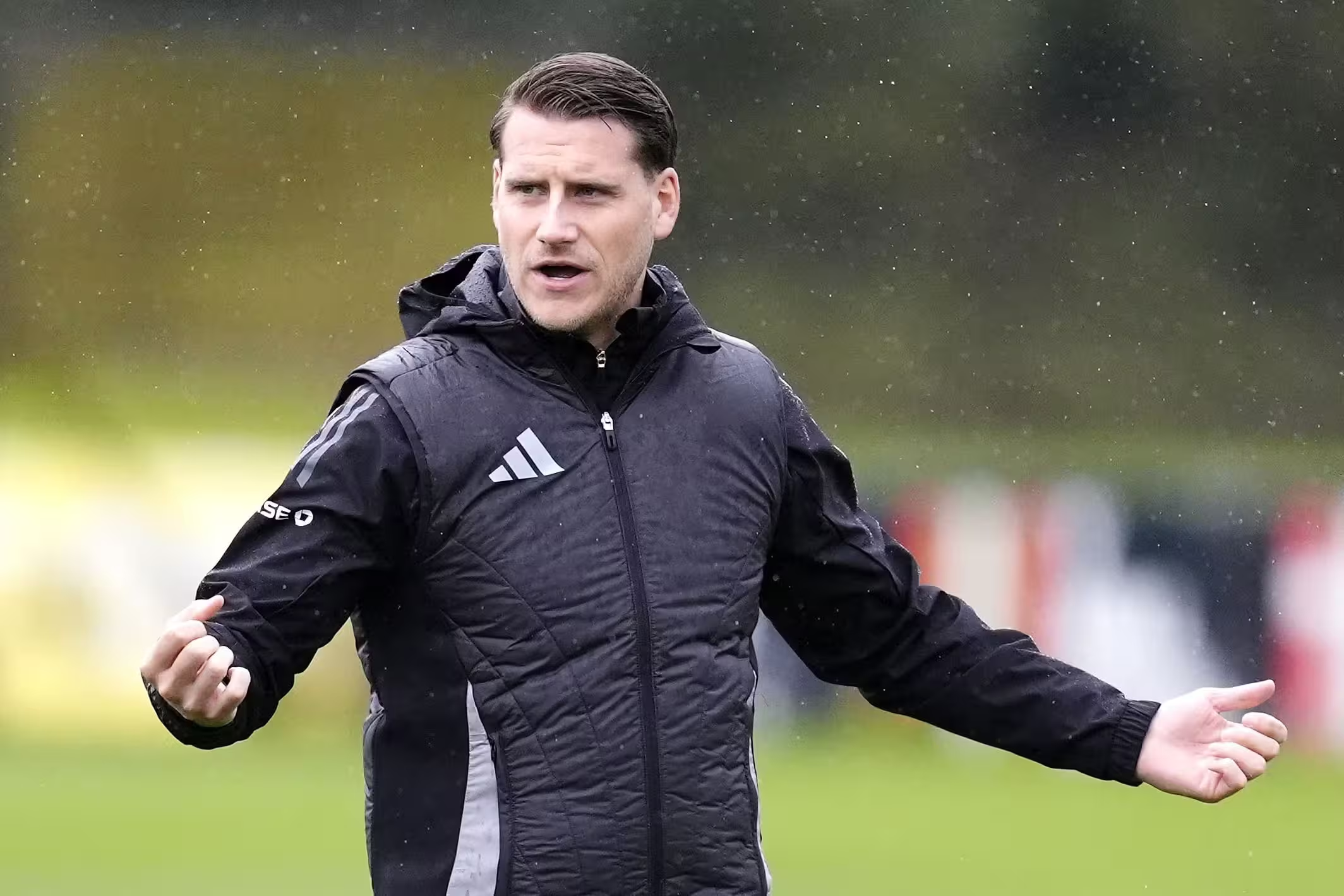
Piet Cremers Wales coach, aged 31, has risen from Wales’ development ranks to take charge for the World Cup qualifier in Liechtenstein as Craig Bellamy serves a ban. This appointment places the spotlight on a coach who has built a reputation through youth work, assistant roles, and a modern, data-informed mindset. The Welsh federation’s decision to elevate him signals a bold shift: promote from within and trust a rising coach rather than chase a high-profile outsider. Cremers Wales coach embodies a new wave of leadership—youthful energy paired with a focus on tactical flexibility and player development that could redefine how Wales approaches senior international football.
His background centers on developing players, implementing adaptable systems, and integrating analytics into daily training. In Wales, that means a blend of technical instruction, positional understanding, and a willingness to experiment with formations and transitions. For fans and pundits, it is a rare chance to observe a young coach tested under the bright lights of a competitive European qualifier. In Liechtenstein, Cremers Wales coach will be judged on how quickly the team translates youth-driven methods into results on the pitch, and whether a data-minded approach can coexist with the leadership expectations fans have come to associate with the national team.
Outbound: FAW official | UEFA | BBC Sport
Cremers’ appointment
Historic breaking of age barriers
When the Welsh Football Association confirmed Piet Cremers Wales coach would lead the side in a competitive fixture, it marked more than a one-off decision. He becomes the youngest coach to lead a UEFA national team in a competitive match since Terry Neill with Northern Ireland in the 1970s. This historic moment is not just about a number; it signals a strategic shift in Wales’ approach to coaching talent. Cremers Wales coach has earned the job on merit developed through youth screening and assistant roles, suggesting Wales is serious about cultivating a homegrown pipeline capable of delivering results on the international stage.
In practical terms, the appointment sets a precedent: a rising coach from within the Welsh system steps into the senior role while Bellamy serves a ban, a move that balances continuity with experimentation. The narrative here is clear—Cremers Wales coach is trusted to steward a World Cup qualifier with an eye on long-term development rather than short-term notoriety. This is a timely test case for Wales as they weigh the benefits of internal promotion against the allure of external, high-profile names.
Outbound: UEFA profile | FAW announcement
Significance of breaking age record
A milestone for Welsh football history
The breaking of the age record in disruptive fashion is more than a novelty. It reflects a broader confidence in the Wales coaching pathway and a willingness to entrust the dugout to someone who has grown up in the system. Piet Cremers Wales coach is a living symbol of a federation betting on data-guided development, not merely established pedigree. This historic moment could boost the credibility of Wales’ long-term plan, reinforcing to players, staff, and fans that opportunity is available to homegrown coaches who demonstrate competence, adaptability, and a modern tactical sensibility.
The broader history of Welsh coaching is being rewritten, with Cremers Wales coach at the forefront of a generation seeking to prove that youth can translate into senior international success. If the experiment pays off, it could embolden the FAW to push more promising coaches through the ranks, accelerating the evolution of Wales’ national team culture toward a more progressive, adaptable model that prioritizes player development and modern game intelligence.
Impact on Wales’ World Cup qualifier strategy
Tactical flexibility under a young coach
Piet Cremers Wales coach arrives with a mindset geared toward tactical flexibility and adaptive game management. In Liechtenstein, the approach will be tested against a side likely to push a high-tempo, compact defense. The young coach’s philosophy centers on creating a versatile system that can shift between positional play and rapid counter-attacks, depending on the match context and opponent behavior. Cremers Wales coach will need to read the game early, adjust pressing intensity, and ensure midfield balance that supports both a solid backline and quick transitions into attack.
The data-informed angle means heavier emphasis on movement patterns, pressing triggers, and attack shapes that maximize player strengths. With Bellamy unavailable, Cremers Wales coach must cultivate leadership within the squad, encouraging on-pitch communication and collaborative decision-making. This is not just about tactics; it is about developing a cohesive unit that can operate with clarity even when planning notes must be adjusted on the fly.
Outbound: FIFA | UEFA coaching resource
What to watch in Liechtenstein
Match expectations and approach
Liechtenstein presents a unique test for Piet Cremers Wales coach: a compact, organized defense and a willingness to press in midfield transitions. Wales will likely adopt a structured 4-3-3 or 4-2-3-1, emphasizing positional discipline and quick ball circulation to unlock space behind Liechtenstein’s defense. Cremers Wales coach is expected to balance patient possession with decisive forward runs, using intelligent rotations to disrupt the hosts’ defensive lines. The match also offers a chance to assess how quickly the team can implement a plan without Bellamy’s in-dugout leadership—an important metric for the resilience of the squad and the effectiveness of the coaching staff around Cremers Wales coach.
Additionally, the setup will test Cremers Wales coach’s ability to establish a credible attacking blueprint that does not rely solely on Bellamy’s leadership. Expect a focus on dynamic movement, overlapping wing play, and a central striker who can hold the ball under pressure while teammates fill attacking lanes. The Liechtenstein game could become a proving ground for personnel choices and the emergence of new combinations that Wales intends to carry forward in future fixtures.
Outbound: WalesOnline analysis | BBC Sport live coverage
What to watch in Liechtenstein (cont.)
Key players and tactical matchups
For fans and analysts, attention will center on how Piet Cremers Wales coach utilizes emerging talents and how the squad adapts without Bellamy’s direct presence. Look for a midfield engine that can sustain possession and shield the defense while providing incisive passes to forward runners. The wide forwards will be tasked with stretching Liechtenstein’s compact blocks, while the fullbacks push high to create overloads and supply width in the final third. The reaction of veterans within the squad to a younger, progressive system will also be telling—whether leadership emerges from on-pitch captains or through collective discipline and routine communication.
The Liechtenstein test is not only about the scoreline; it is about whether Piet Cremers Wales coach can translate a data-informed plan into a cohesive, working unit under pressure. The match will reveal how quickly the players buy into his methods, how well the backline handles counter-attacks, and whether Wales can sustain offensive pressure across 90 minutes. If Cremers Wales coach can demonstrate a clear, flexible strategy and visible progress in organization and tempo, it will be a strong signal for Wales’ development trajectory and long-term planning.
Outbound: UEFA match info | FAW updates