
Subtotal $0.00


139
Messi short term transfer offer rejected
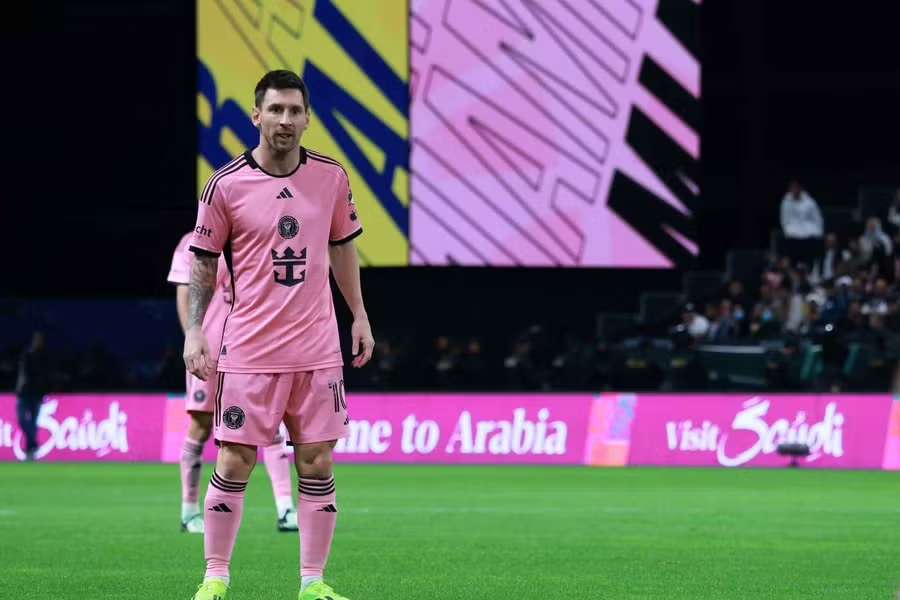
Messi Saudi transfer rejection marks a turning point in how Saudi football leverages marquee names. The kingdom reportedly declined Lionel Messi’s proposal for a short-term training stint ahead of the 2026 FIFA World Cup, signaling a deliberate preference for lasting commitments over temporary experiences. This isn’t a vanity move; it’s a strategic stance designed to deepen the league’s competitiveness, sponsorship appeal, and global reach. By prioritizing multi-year value, Saudi clubs aim to anchor success beyond a single season and create a durable pathway to world-class status. The topic immediately clarifies why Inside Football News regards this as more than a cameo appearance in a single season and a sustained plan for growth.
Abdullah Hammad, CEO of Mahd Sports Academy, framed the Messi Saudi transfer rejection as a broader signal: permanence beats transience. The decision aligns with a model that rewards players who can commit across multiple seasons, thereby strengthening the league’s talent pipeline and commercial muscle. While fans may miss a high-profile training cameo, the policy emphasizes stability, league development, and partnership longevity over one-off stints. This is a foundational shift in how star power is monetized and integrated into long-term strategic goals for Saudi football and its multinational sponsors. For context, see how long-term contracts shape value in contemporary football economics Reuters.
- Short-term offers versus long-term value and lock-in
- Permanent contracts as the backbone of league strategy
- Rationale for prioritizing players who can commit long-term
- Impact on Messi’s marketability and future club relations
- US-Saudi football investment narrative and shifts
Saudi Pro League prioritizes permanent signings
The Saudi Pro League’s playbook centers on permanent signings rather than temporary training stints, a philosophy that shapes every major negotiation. The league seeks to translate star power into multi-year commitments that stabilize teams, expand broadcast rights, and attract sustained sponsorship. The logic is simple: longer contracts reduce churn, build a cohesive team identity, and enable year-after-year fan engagement. This approach mirrors governance in other PIF-backed ventures and is considered essential for achieving global competitiveness in a saturated market. The Messi incident is cited not as a setback but as evidence of a deliberate, long-horizon strategy that the league believes will yield durable returns.
Observers note this preference aligns with the presence of players who can anchor clubs for several seasons, such as Cristiano Ronaldo, Neymar, and Benzema, under long-term deals. The strategy aims to knit together on-field performance with off-field growth—branding, merchandising, and media rights—into a sustainable ecosystem. It also reinforces the Saudi-US football investment dichotomy, where the US explores varied financing structures, while Saudi models emphasize stability and long-duration value. For more on the ownership and financial framework behind this approach, see the Public Investment Fund’s overview PIF.
- Long-term commitments with clubs
- Economic rationale for multi-year contracts
- Player pipelines and local talent development
- Comparative view: US experimentation vs Saudi stability
PIF’s long-term investment vs temporary deals
The Public Investment Fund’s non-flashy, long-horizon investment strategy underpins the entire Saudi football project. The emphasis is on creating lasting value through stable clubs, multi-year sponsorships, and integrated development programs that extend beyond the pitch. Temporary deals may deliver quick headlines, but they rarely secure the commercial and developmental gains that multi-year commitments can deliver. This philosophy aligns with a broader aim to transform Saudi football into a globally respected league with systematic growth, deepening ties to regional markets and international media partners. The Messi Saudi transfer rejection becomes a data point illustrating how long-term planning outpaces one-off appearances.
Analysts argue that PIF’s approach builds enduring assets—club infrastructure, youth academies, and cross-border partnerships—that can compound in value over time. The strategy also creates predictable revenue streams from broadcast rights, sponsorships, and merchandising. Ultimately, it’s about generating a self-sustaining ecosystem rather than chasing short-term glamour. For deeper context on how long-term investments shape global sports markets, consult the official PIF perspective PIF.
- Asset-building through multi-year commitments
- Brand expansion via durable partnerships
- Youth development and talent pipelines
- Pathways for players like Messi to fit long-term plans
Impact on Messi’s career and market value
The Messi Saudi transfer rejection carries implications beyond a single negotiation. For Messi’s career trajectory, the decision reframes how top players weigh offers from the Saudi system. A permanent, multi-year move can elevate marketability in a growth market, but it also locks in a specific context for branding, competition level, and league influence. For European clubs and sponsors, the choice becomes a question of whether a long-term Saudi association adds net value to a player’s legacy and commercial appeal. The evolving market conditions suggest that Messi’s options may increasingly hinge on long-term strategic fit, rather than short-term appearances on a grand stage.
From a branding perspective, long-term Saudi ties could unlock stability in sponsorships and global reach, but they must align with Messi’s personal and professional objectives. Clubs across Europe and the United States weigh long-term leverage versus short-term access when evaluating deals. As the market evolves, Messi’s next chapter will likely be influenced by the balance between multi-year commitment, competitive environment, and the ability to sustain a diversified portfolio of endorsements. See how market analysts view player value in shifting landscapes Forbes.
- Short-term exposure vs long-term co-branding
- Market value implications of multi-year Saudi deals
- Endorsements and sponsorship stability
- Future pathways for Messi in global football hubs
Saudi vs US football investment dichotomy
The broader debate pits Saudi Arabia’s patient, multi-year investment framework against the United States’ more flexible, splash-driven financing experiments. Saudi plans emphasize league-building, talent development, and long-duration deals that anchor a growing sports empire. The US approach often prioritizes rapid visibility through high-profile transfers, sponsorship blitzes, and flexible payroll strategies to attract star names quickly. This dichotomy shapes not only where players land but how fans experience the game and how sponsors evaluate risk. In this light, the Messi Saudi transfer rejection is a microcosm of a global trend toward stability on one side and opportunistic experimentation on the other.
For readers seeking a broader analysis, the US-Saudi contrast is frequently discussed in financial and sports circles, including commentary from major outlets such as BBC Sport BBC Sport and industry reports on sponsorship and media rights. As Saudi football expands its footprint, the balance of power may tilt toward long-term value creation, while the US looks to diversify risk and accelerate growth through varied financing models. The dynamics will influence how players like Messi navigate negotiations and how fans perceive the most compelling path to success.
- Comparison of financing models across leagues
- Impact on player mobility and contracts
- Sponsorship and media-rights strategies
- Future growth trajectories for global football hubs