

Subtotal $0.00


234
Overview
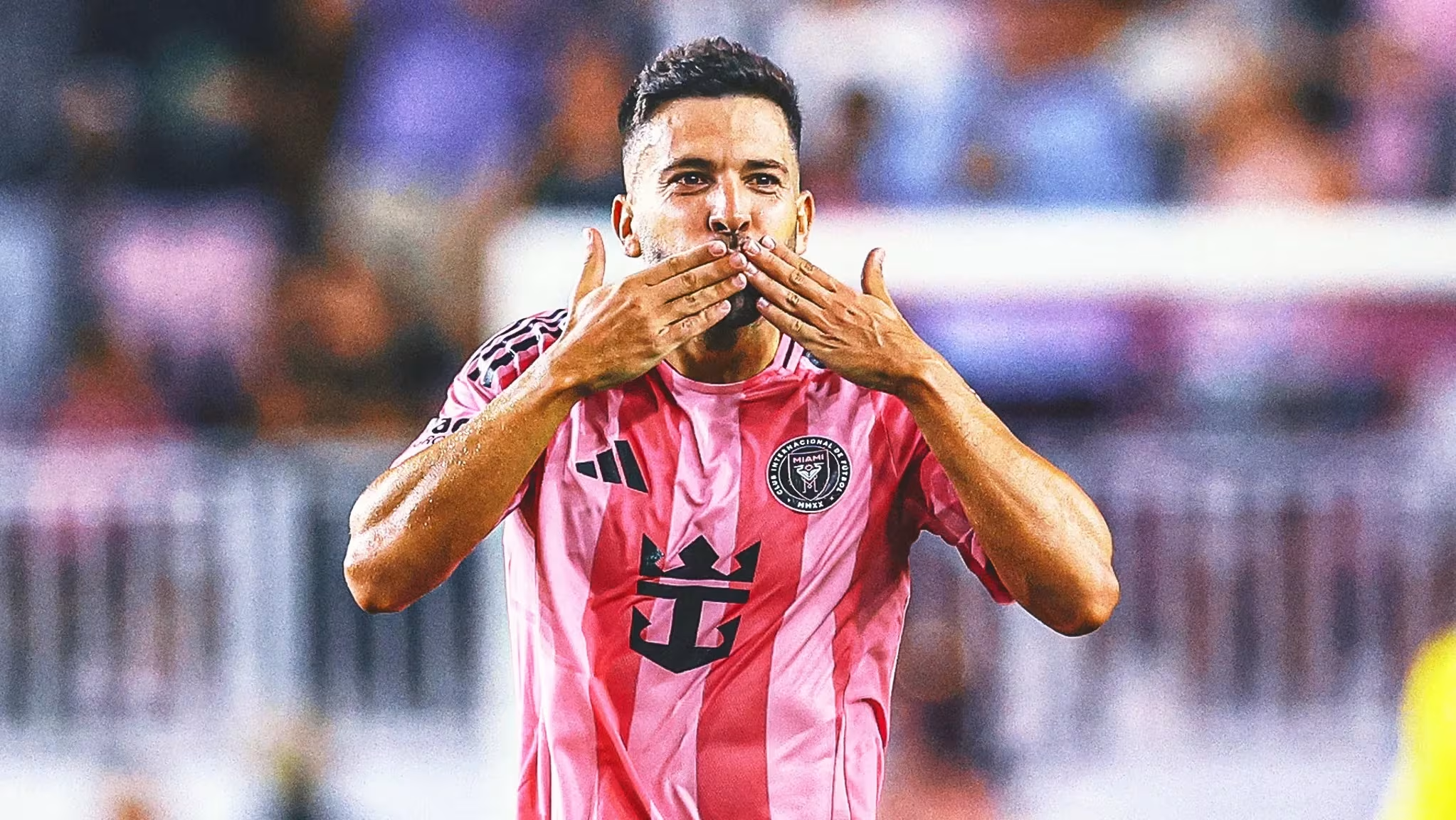
The football world woke to a surprising turn as Jordi Alba retirement became the headline. Inter Miami’s left-back, a veteran who had just extended his contract, stunned supporters by announcing an end to his professional career. The timing looked especially abrupt given his ongoing form and the club’s push for MLS Cup contention. For fans, the news carried the weight of a chapter closing in a story that had seen Alba grow from a skillful, opportunistic defender to a club vice-president of locker room influence. The phrase Jordi Alba retirement is now etched in MLS conversation, a reminder that even the most settled plans can pivot on a single decision.
A surprising retirement shock
The shock was twofold. First, the announcement came shortly after Alba renewed terms, a contract extension that suggested stability. Second, his performance in the build-up to the decision kept him as one of Inter Miami’s most reliable players. Reports suggest a personal calculation behind the move, though precise details remain private. The club and Alba alike acknowledged the abrupt shift, prompting questions about how the defense will adapt without his experience at left-back. For MLS observers, the incident underscored how quickly squad dynamics can pivot in a league that rewards both depth and leadership. Inter Miami’s official stance offered no grand explanation beyond thanking Alba for his service, while MLS outlets began to forecast post-retirement implications for the squad.
A veteran’s impact on and off the pitch
Beyond his on-ball contributions, Alba was a transformative presence in Inter Miami’s ranks. He helped younger players adjust to MLS rigor and the unique tempo of American football culture, while also elevating the team’s build-up play alongside Lionel Messi. His leadership style—calm, technical, and relentlessly professional—made him a go-to voice in the locker room. The Jordi Alba retirement echoes far beyond a single position; it signals a potential reshaping of the club’s leadership model and the way it integrates veteran guidance into its long-term plans. For supporters, the retirement raises the question of how Inter Miami will maintain the balance of experience and youthful energy that Alba helped foster across multiple seasons.
Alba’s retirement decision
The decision to retire came after Alba had recently renewed his contract, creating a paradox that dominated the ensuing discourse. Club officials described the move as a personal choice made after careful reflection, emphasizing gratitude for what Alba gave the team. Local and national outlets noted the unusual timing, as most players would settle into their renewed terms before contemplating such a major shift. The Jordi Alba retirement narrative thus centers on an abrupt pivot that challenges both the club’s immediate plans and its longer-term strategy for the left-back position.
Contract renewal and sudden pivot
Significant questions emerged about what prompted the sudden pivot after a contract extension. Some insiders pointed to personal factors, while others cited a desire to pursue different chapters in life after contributing at the highest level. Regardless of the specifics, Inter Miami faces two immediate tasks: assessing the vacant left-back slot and preserving the balance Alba helped maintain across the backline. The absence of a formal, detailed explanation adds to the intrigue, but the core message remains clear: a veteran player chose to step away while at peak market value and continued productivity. MLS context offers a broader view of how clubs recalibrate after such decisions.
Leadership and squad dynamics
Alba’s leadership stretched beyond technique. He set standards in training, preparation, and professionalism, influencing both the senior and younger players. With his departure, Inter Miami must cultivate leadership from within or identify a new voice to stabilize the dressing room. The Jordi Alba retirement moment will be weighed against the club’s broader approach to recruitment, development, and squad harmony. In the short term, expect debates about how to maintain defensive cohesion and how to preserve the club’s aggressive, possession-based identity that Alba helped propel.
Real reason revealed
The real reason behind Jordi Alba retirement was not disclosed in full detail, leaving commentators to fill the gaps with informed speculation and cautious analysis. What’s clear is that Alba spoke openly about a personal assessment that extended beyond the typical considerations of form and fitness. In many conversations around the topic, players and coaches stressed the importance of timing, personal priorities, and the sense of closure that comes with stepping away on one’s own terms. The club echoed that sentiment, noting respect for Alba’s decision and a commitment to supporting him as he transitions out of football. The Jordi Alba retirement case demonstrates how a player’s private rationale can become a strategic talking point for an organization navigating transition. BBC Sport coverage underscores the complexity of retirement decisions in modern football.
Hints and speculation
While the precise reasons remain private, several themes recur in public discussion: fatigue from a demanding schedule, a desire to spend more time with family, and the appeal of a new chapter away from the pressures of MLS competition. Alba’s own words, when available, will shape how fans interpret the decision and how Inter Miami responds on the field. In any case, the Jordi Alba retirement has become a focal point for conversations about player load, career planning, and the evolving nature of professional football careers in the United States. For a broader understanding of retirement timing, industry analyses from ESPN provide useful context.
What this means for Inter Miami
With Alba’s exit, Inter Miami faces a critical transition. The left-back role is vacant, and the club must decide whether to promote from within, recruit a ready-made replacement, or pursue a hybrid solution that preserves tactical flexibility. The immediate implication is a potential shift in defensive structure, affecting how the backline compresses and how the wingers track back. The Jordi Alba retirement forces a recalibration of the club’s defensive philosophy, especially in a league that prioritizes speed, width, and pressing intensity. The club’s scouting network and academy pathways will be tested as they seek a candidate who can emulate Alba’s balance of coverage and attack. Outbound analysis from Football Italia highlights how clubs in similar situations weigh options carefully before committing to a major defensive signing.
Impact on Inter Miami
Alba’s departure leaves a sizable void in Inter Miami’s lineup, and the impact will be felt across multiple dimensions. The left-back position, with Alba’s blend of discipline and marauding runs, provided a dependable base for the team’s build-up play. The Jordi Alba retirement thus creates questions about the club’s defensive balance and how it might influence the rest of the back four. Coaches will need to rethink pressing triggers, width coverage, and the transitions from defense to attack. In addition, leadership dynamics shift in the locker room. Alba’s presence was a stabilizing force for younger players and new signings who needed guidance on MLS tempo and travel demands. The club may lean on senior players or a strategic acquisition to fill the leadership vacuum left behind by Alba’s exit.
Defensive balance and lineup options
Inter Miami now faces several practical options. They could promote from the academy to preserve a familiar style of play, bring in an experienced left-back with MLS know-how, or experiment with a right-footed defender on the left to create a new tactical shape. Each route carries different implications for the squad’s balance, rhythm, and budget. The team’s midfield and full-back interplay will be under scrutiny as the coaching staff seeks to maintain a pressing identity without Alba’s exact brand of versatility. The Jordi Alba retirement thus becomes a catalyst for broader strategic decisions about squad composition and resource allocation.
Locker room dynamics and fan sentiment
Locker room chemistry often shifts after a veteran departure, and Inter Miami will monitor the mood among players who benefited from Alba’s mentorship. For fans, the Jordi Alba retirement marks the end of an era and the beginning of a new chapter in the club’s MLS journey. Supporters may welcome a new left-back who can bring fresh energy while honoring Alba’s legacy, particularly in European competitions and MLS Cup races. Public reaction has been mixed but largely respectful, recognizing Alba’s contributions and awaiting the club’s next steps. For ongoing coverage, see MLS club analyses linked to MLS News.
Future prospects and legacy
The Jordi Alba retirement naturally prompts questions about the future. The club must decide whether to promote internally, sign a veteran replacement, or invest in a younger talent with high upside. Each option carries distinct implications for the squad’s identity, pace, and tactical flexibility. Alba leaves behind a legacy that transcends statistics. His adaptability, leadership, and willingness to mentor teammates have shaped the player development culture at Inter Miami. As the team continues its MLS Cup push, it will seek to honor that legacy while building a defense capable of sustaining a competitive standard. The Jordi Alba retirement also serves as a case study for clubs navigating mid-career retirements in a demanding league.
Who fills the left-back slot?
- Promote a homegrown talent with MLS upside
- Sign an established left-back with MLS and international experience
- Trial a tactical shift, using a versatile full-back to cover multiple positions
Alba’s legacy and the club’s path forward
Alba’s legacy at Inter Miami rests on more than his minutes on the pitch. He set a standard for professional conduct, helped integrate star teammates, and contributed to a winning culture during a pivotal period in MLS history. The club’s path forward will be measured by how effectively it translates that leadership into sustained performance, depth, and resilience. The Jordi Alba retirement becomes a defining moment to reimagine the squad’s long-term strategy while preserving the values that made Alba such a pivotal figure in the club’s recent ascent.