

Subtotal $0.00


142
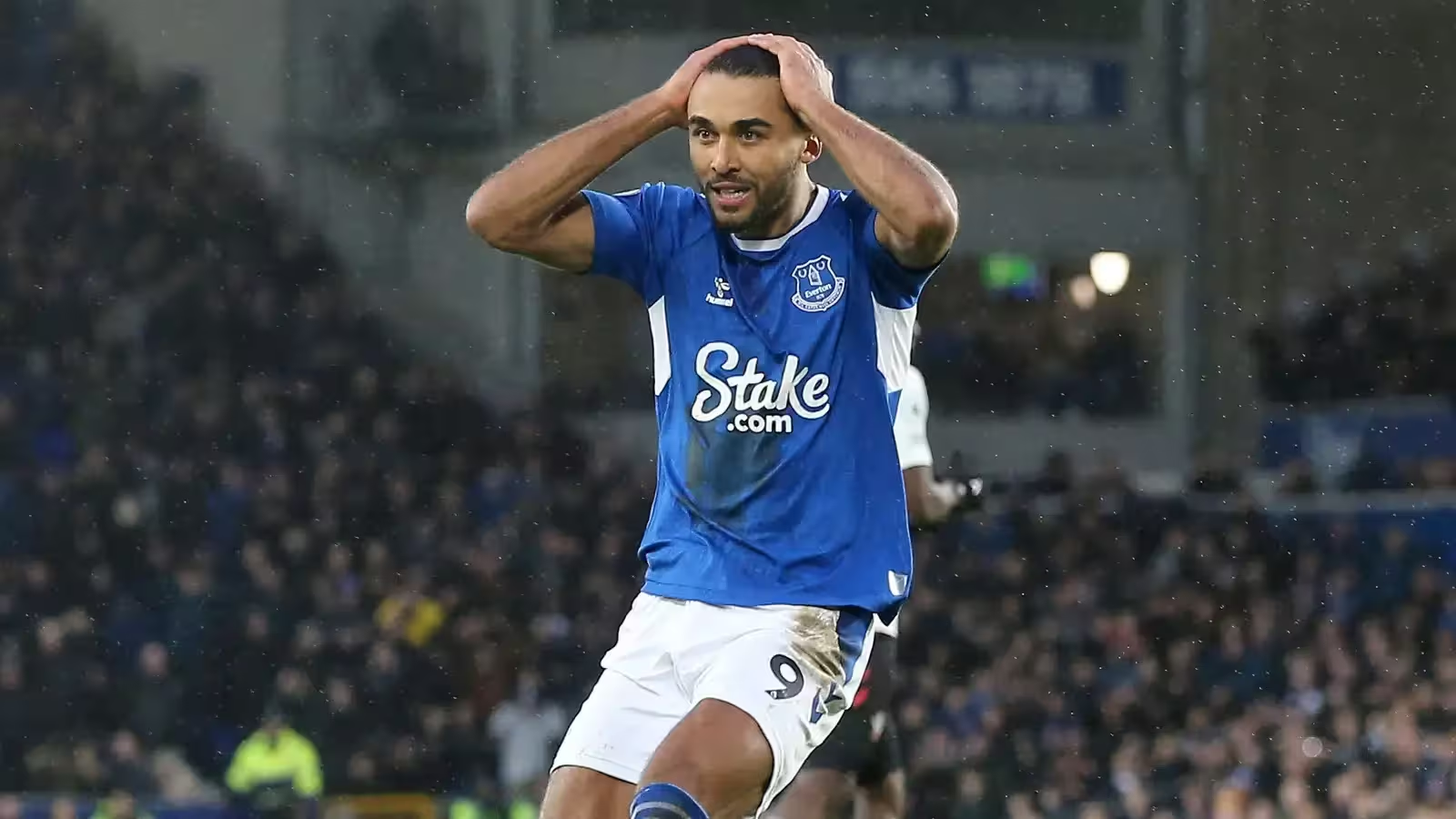
Everton’s striker drought
The scale of the problem
The Everton striker search has dominated discussions around the club for a decade. In that time, fans have watched a revolving door of managers, a changing tactical blueprint, and a stubborn goal-scoring shortfall. The lack of a reliable number nine has limited Everton’s ability to build chemistry and consistency in attack. This isn’t just about one summer window; it’s about a long-term pattern that stretches across leadership, recruitment, and development. The club needs a plan that marries ambition with discipline, not a series of quick fixes.
Everton’s ongoing struggle to find a dependable goalscorer sits at the heart of recent struggles. BBC Sport has traced a ten-year chase that reads like a recruitment critique as much as a sporting narrative. The question persists: is the issue recruitment, managerial remit, or the broader squad structure? Either way, the lack of a stable attacking blueprint has cost goals and momentum. For fans, the refrain is simple: a serve-and-finish forward who can deliver regularly would transform the ceiling of this team.
The numbers behind the chase
Statistically, the club has not lacked effort. The Tosun signing in 2017 was pitched as a proven Premier League goalscorer, but adaptation, price, and system fit limited impact in the long term. Since then, Everton have chased a series of targets with varying profiles and price tags. The gap between expected production and actual return has become a recurring theme. The numbers aren’t just about goals; they reflect injuries, assists, link play, and the ability to thrive within a shifting support cast.
The challenge is systemic. A reliable striker needs consistent service from a stable midfield and a designed attacking plan. When managers rotate, the rhythm between strikers and creators breaks down. This is not merely a transfer problem; it’s a framework problem. As Everton continues to search for the right fit, the club must decide whether to invest in a long-term striker strategy or gamble on short-term fixes that might derail a coherent plan. For now, the focus is clear: align recruitment with a patient, data-driven approach to the striker role. BBC Sport provides a useful lens on how this has unfolded across the last decade.
Managerial turnover and its impact
Instability at the top
Everton’s managerial turnover has been a defining feature. In roughly 12 years, nine permanent bosses have overseen the club. That churn disrupts any chance to crystallise an attacking philosophy. A striker’s adaptation is easier with a clear framework and consistent messaging. When the voice in the locker room and the on-pitch instructions shift every few months, even a high-quality forward struggles to settle, link with teammates, and understand the attacking rhythm the manager wants.
This constant change feeds a cycle: new ideas, new systems, and new hopes every season. The lack of managerial continuity makes it harder to recruit a striker who can thrive long-term. It also complicates the resale value of a player who needs time to settle. In short, managerial turnover compounds the striker problem and buys little time for a young or unproven striker to grow within a defined plan.
How managers shape attacking options
Managers set the tone for the desired style of play, from tempo to off-ball runs. When a club changes direction, forwards must relearn movement and chemistry with teammates. Everton’s attempts to buy a solution often collide with a shifting tactical language. A striker who thrives in one setup may struggle in another. The outcome is a mismatch between the player’s strengths and the system’s demands. That misalignment perpetuates the goal drought and fuels fan frustration.
To break the loop, Everton needs a sustainable framework that survives managerial changes. A clear plan for how to feed a striker, how to build width, and how to convert chances must outlast any single coach. The club can then recruit with intent, not desperation. A patient, disciplined approach can convert a high-potential forward into a regularly scoring contributor, even amid coaching transitions. ForFurther reading, visit Everton FC and analysis from BBC Sport.
Transfer policy and investment
Budget, risk, and data-driven screens
Everton’s transfer policy has long tried to balance ambition with financial prudence. The club faces a high bar: invest enough to close the gap to rivals while maintaining sustainability. A data-driven screening process can help identify goalscorers who fit the system and culture. Yet money alone cannot fix a chronic problem. Data must inform not only who to buy but when to buy and how to integrate them into the squad’s broader dynamics. This means a long-term plan tied to a clear wage structure, contract horizons, and performance metrics beyond raw goals.
To implement a successful striker strategy, Everton must prioritize players who offer rhythm, pressing work, and the ability to combine with midfield playmakers. A functional market approach includes robust scouting, a measured price ceiling, and a plan for adaptation. When done well, recruitment aligns with development and succession planning, not reactive panic. Learning from peers and applying calibrated analytics can yield a serve-and-finish forward who advances the project rather than stalling it.
Long-term planning vs immediate fixes
Long-term planning means designing a striker archetype the club can grow with. Immediate fixes are tempting, especially when the pressure is high. The challenge is to avoid knee-jerk arrivals that don’t fit the future spine of the team. Everton must set criteria for age, profile, goal expectancy, and adaptability. A patient approach can pay dividends if it’s supported by a clear pathway from youth to first team. This is about building a pipeline, not chasing a one-season hero.
Investing in youth, integrating academy products, and combining them with selective, high-pitched signings can create a more resilient attacking core. For perspective, ongoing transfer coverage and policy debates can be explored at Transfermarkt and Premier League.
Past signings: Tosun and others
Tosun era: expectations vs reality
Cenk Tosun arrived with a track record of goals in a competitive league. The signing carried promise that a proven Premier League striker could provide a reliable core. In practice, adaptation, pricing, and system fit limited long-term impact. The Tosun experience became a case study in how even priced-to-deliver targets can struggle without the right environment. Fans remember the early optimism, then faced with the reality that a single addition cannot fix a broader structural issue without supportive surroundings.
His time at Goodison Park illustrates the broader point: a striker needs continuity, a clear instruction, and consistent supply. The right player can transform a team’s ceiling, but the absence of a stable framework turns even a quality forward into a swing vote in a larger tactical debate. The Tosun chapter remains a reminder that recruitment must align with a defined plan, not a stand-alone signing. For a retrospective, see BBC Sport.
Other attempts: Lukaku, Niasse and targets
Everton’s pursuit of goal threats has included big names and varied profiles. Romelu Lukaku delivered moments of brilliance in his earlier stay, showing what a top-tier striker could achieve in blue. Yet, his departure underscored the difficulty of sustaining a high-output attack without a cohesive system. Fluctuating form from other targets, such as younger prospects or mid-tier finishers, underscored the need for a patient, long-range strategy rather than a string of one-off bets.
As the club canvassed options, the challenge remained: identify a striker who can anchor the attack while adapting to evolving tactics and teammates. The discussion now centers on whether the next signing should be a veteran with proven consistency or a younger forward with high upside who fits a disciplined plan. The key is to ensure every move advances a sustainable path rather than producing another short-lived crest of excitement. Reports and rumours continue to surface, with Transfermarkt offering ongoing context on market activity.
The path forward for Everton
Building a sustainable striker factory
The way forward for Everton is not a single transfer. It is a holistic plan to build a sustainable striker pipeline. This includes a robust scouting network, a youth development pathway, and a stable tactical system that nurtures strikers. A dependable number nine should be the culmination of a deliberate process, not a one-off signing. The club must identify a profile that thrives with their evolving midfield and wing play, then invest in players who can grow in that mold over several seasons.
Realism matters. Everton should map out contract timelines, develop a clear risk framework, and set concrete milestones for goal production. A patient, data-informed approach can eventually yield a forward who brings both leadership and consistency. Integrating this plan with a clear on-field identity will help translate transfer activity into sustained league progress. For fans seeking deeper analysis, see ongoing coverage at BBC Sport.
Balancing ambition with prudence and the way ahead
Ambition must coexist with prudence. Everton’s next striker must fit a longer-term vision rather than merely addressing a temporary gap. A patient, principled approach includes price discipline, salary caps, and a clear path to first-team responsibility. The ideal candidate will contribute goals, leadership, and a willingness to develop within a shared tactical framework. That combination can lift the entire squad’s performance and help the club transition from chasing a dream to delivering a reliable reality.
Looking ahead, the focus should be on implementing a data-informed recruitment cycle, integrating youth players into the first team, and securing a striker who can thrive under a consistent system. If the club can align recruitment with a stable managerial plan, the Everton striker search may finally yield a serve-and-finish forward who can deliver week in, week out. For ongoing updates and analysis, read more at Transfermarkt and Everton FC resources.