

Subtotal $0.00


71
Lead
Since Bruno Guimaraes arrived at Newcastle United in 2022, the club’s trajectory has shifted. The Brazilian midfielder acts as the technical spine of Eddie Howe’s side, initiating play from deep positions, offering a reliable outlet under pressure, and driving transitions from defence to attack. The Guimaraes impact on Newcastle is most evident in how the team builds from the back, links midfield to attack, and imposes tempo on a game that can tilt in either direction. When he is in the XI, Newcastle typically function with balance and purpose; his movement, decision‑making, and ball retention give the midfield a stability that lets the flanks stretch the opposition and forwards find pockets of space.
In tight league moments the difference is clear. Without Guimaraes, build-ups become more conservative and less penetrative, opponents press with greater intensity, and Newcastle often rely more on wing‑backs for width than on a central engine to unlock defenses. The context of recent fixtures, including the clash with Aston Villa—who sit third and are in strong form—emphasizes how crucial Guimaraes is to unlocking results in tight games. The 3‑0 Champions League win over PSV Eindhoven serves as a reminder of what Newcastle can achieve with him on the pitch, while league performances without him remain inconsistent. For now, Guimaraes impact on Newcastle is a key determinant of their ceiling this season, especially in high‑press, high‑stakes situations. BBC Sport – Newcastle United and Premier League – Newcastle United.
Guimaraes influence on Newcastle
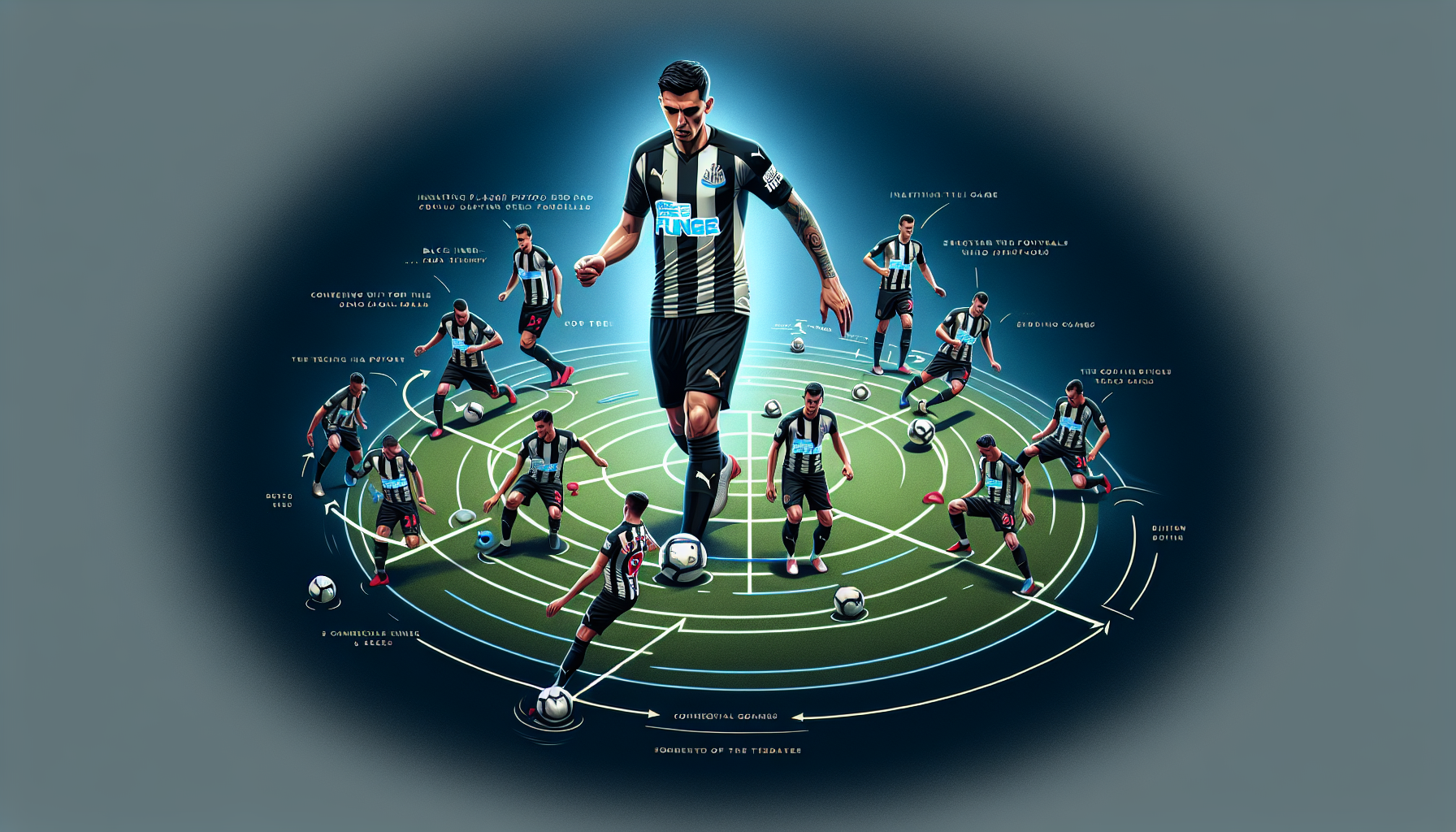
At the heart of Howe’s system, Guimaraes acts as the engine of distribution and transition. He sits between the back line and the forwards, translating pressure into progress and connecting defenders with attack in one movement. The Guimaraes impact on Newcastle is concrete: he lowers the risk in possession by retaining the ball under pressure, sprays accurate vertical passes to forward runners, and provides an outlet when the opposition floods the central channels. His clever positioning keeps the midfield compact, which allows the wide players to stretch the pitch and the attackers to exploit spaces behind pressed lines.
Beyond ball progression, his work rate in off‑the‑ball moments stabilizes transitions and helps Newcastle regain shape quickly. His range of passing—both short retainers and longer diagonals—creates multiple options in build‑up, keeping opponents guessing and preventing predictable play. This is central to how the team maintains tempo and control, especially in fixtures where the opponent presses aggressively. In practical terms, Guimaraes impact on Newcastle can be seen in the balance between defensive solidity and attacking creativity, with his presence enabling wing‑backs to stay higher up the pitch and midfielders to make late runs into danger zones.
- Deep‑lying playmaking that progresses through lines
- Reliable ball retention under pressure
- Smart movement to create spaces for teammates
- Energy in transitions and defending from the front
For fans and analysts, the takeaway is simple: the Guimaraes impact on Newcastle isn’t just about passing quality; it’s about the confidence to play through the middle and the structural stability that allows the team to press effectively and attack with purpose. Outbound perspectives from supporters and pundits alike often cite the way he untangles tight situations and preserves Newcastle’s compact shape when the game becomes frantic. UEFA and BBC Sport provide additional context on how such roles influence team performance across competitions.
Recent form with Guimaraes
Recent form when Guimaraes is in the lineup demonstrates a noticeable lift in Newcastle’s ability to control games and dictate tempo. The team tends to dictate the pace when he is present, with smoother ball progression from the back and more purposeful passes into midfield corridors. The Champions League display against PSV Eindhoven highlighted what this team can achieve—circling the ball with intent, finding vertical routes, and finishing chances with composure—reminding supporters of the potential locked behind Guimaraes’s involvement. The contrast against Villa’s pressing strength in a league context underscores how fragile results can become when he is unavailable. BBC Sport notes similar patterns in recent fixtures where his presence correlates with better ball progression and higher incision in attacking phases.
When Guimaraes plays, Newcastle’s forward line finds pockets of space more readily, and their central midfield can split defensive blocks with sharper vertical passes. The longitudinal alignment—back three or back four depending on the moment—benefits from his ability to recycle possession efficiently and to switch play quickly to the flanks. This is not merely a stylistic preference; it translates into tangible outcomes, such as increased shots on target and more xG generated from central corridors. The impact on Newcastle’s performance metrics reinforces the narrative that Guimaraes impact on Newcastle remains central to their competitive edge in domestic and European competitions. For more on individual match performances, Premier League match reports often highlight how Guimaraes shapes the dynamics of midfield battles. Premier League Match Centre and Results & Fixtures.
Tactical implications of his absence
The absence of Guimaraes forces Howe to reassess the midfield balance. The Guimaraes impact on Newcastle in such situations is a reference point for what the team loses: a reliable conduit between the defensive line and the forwards, a player who steadies the ball under pressure and initiates attacks with precision. Without him, build‑ups tend to become more conservative, with longer passing chains that invite opposition pressure and reduce the tempo at which Newcastle can break lines. Opponents can compress the space between the lines more easily, denying quick combinations and forcing the wing‑backs to shoulder more responsibility for width. The tactical consequence is a shift toward a more wing‑based approach, which can blunt central creativity and reduce the likelihood of cutting passes into dangerous corridors.
To counter this, Howe might experiment with a deeper‑lying midfielder alongside a more dynamic operator or deploy a slightly different shape to preserve balance. A potential adjustment could involve a longer ball circulatory pattern to reset phases and a willingness to reallocate pressing duties to the forwards and wing‑backs. Such adjustments influence Newcastle’s equilibrium, often altering how the team presses and how quickly they transition from defence to attack. The broader implication for the season is whether Howe can preserve a similar level of threat without the fulcrum role that Guimaraes plays, or whether the team must adopt a more pragmatic, compact framework to protect results in tight games. Premier League Analysis and BBC Sport – Football offer ongoing insights into tactical shifts across fixtures.
What this means for upcoming fixtures
Looking ahead, the absence of Guimaraes places additional pressure on Howe to innovate and on teammates to shoulder more responsibility. The Guimaraes impact on Newcastle in upcoming matches will depend on how well the squad can retain structure while redistributing distribution duties. The plan may involve tighter midfield lines with a more pronounced double‑pivot to maintain ball security, while allowing more frequent runs from the full backs to compensate for the creativity gap in central zones. The objective is to preserve Newcastle’s shape, avoid overreliance on individual brilliance, and keep options open for quick transitions when space appears in the channels on the flanks. In practical terms, this could mean more direct football at times, with quicker ball into midfield corridors and more aggressive wing play to unlock compact defenses. Off the field, the club will rely on squad management and rotation to mitigate fatigue and keep energy levels high for the chasing pack in the league table. For fans following the campaign, the message is clear: Guimaraes impact on Newcastle remains a benchmark for success, and the team will need to compensate intelligently until he returns. BBC Sport – Newcastle News and Premier League – Upcoming Fixtures.
As the season progresses, the psychology of the squad will also hinge on the presence of Guimaraes in the team. When he plays, confidence is higher, and the collective belief that they can break down stubborn defenses is reinforced. When he sits out, the mental edge shifts, and the team must demonstrate resilience and tactical discipline to maintain momentum. This dynamic will shape how Newcastle navigates a congested calendar and aims for a top‑four finish, with the Guimaraes impact on Newcastle serving as a north star for both players and managers seeking to maximize performance under pressure.
Conclusion
Bruno Guimaraes has become more than a midfielder for Newcastle United; he is the driving force behind how Eddie Howe’s system functions. The Guimaraes impact on Newcastle translates into smoother build‑ups, smarter ball retention, and a higher ceiling in big matches. His absence exposes vulnerabilities in build‑up play and increases the risk of stagnation against organized defenses. Yet even in his absence, the club can adapt through verified tactical adjustments and by leaning on the depth of the squad to maintain balance and tempo. The path to a successful season likely runs through how effectively Howe reshapes the midfield when Guimaraes is unavailable, and how quickly the team can return to their best once he resumes action. The coming fixtures will test whether Newcastle can sustain momentum without their central engine, and whether the wider squad can sustain the Guimaraes impact on Newcastle in his absence while continuing to chase a top-four finish.