

Subtotal $0.00


143
Pedri’s return anticipated
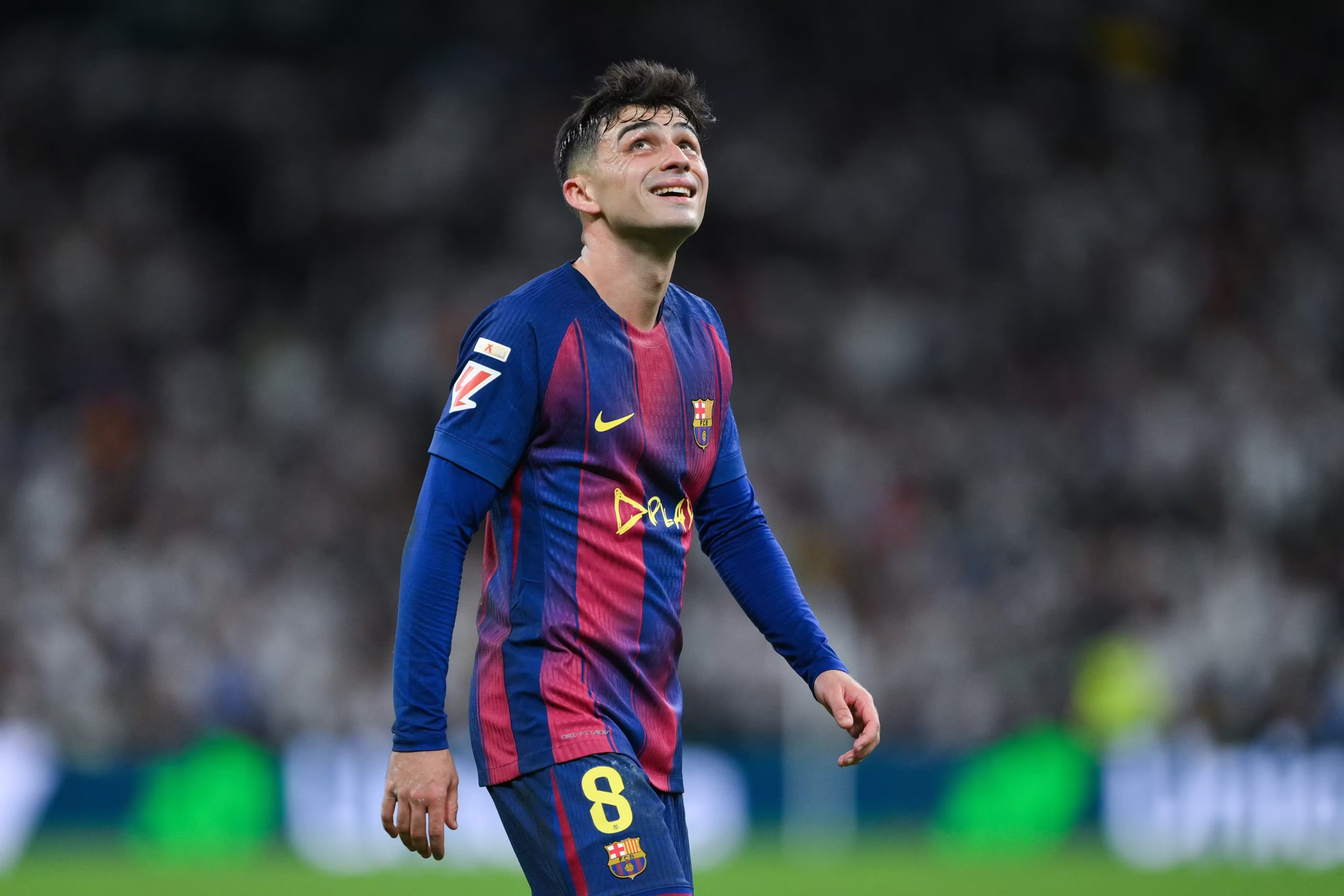
The news surrounding Pedri’s fitness has become the brightest talking point for Barcelona as they prepare for a pivotal clash with Chelsea. The latest update, reported by journalist Xavi Campos, suggests that the Barcelona midfielder could feature for the first time since his setback. This is more than a muscle strain or minor niggle; it signals a major step in Barça’s bid to maintain momentum through a demanding schedule. The prospect of the Pedri return for Chelsea is not just about a single match. It represents a potential turning point for Barcelona’s creative axis and their ability to press with tempo against elite opposition. Barça’s official site and UEFA have emphasized the importance of squad depth as Europe intensifies.
Pedri’s return would inject a level of ball mastery and vision that has been conspicuously absent in recent weeks. Known for his technical finesse, footwork under pressure, and seamless shuttle between defense and attack, Pedri typically helps Barcelonas control tempo, unlock compact defenses, and knit the midfield with the forward line. When fit, his movement creates space for others and keeps the ball flowing through tight ranges, a quality that is particularly valuable against Chelsea’s aggressive press. The idea of the Pedri return for Chelsea has supporters dreaming that Barcelona can regain its rhythm at a moment when every possession matters.
If minutes are managed carefully, Pedri could step back into action without risking a setback. The club will be mindful of the hamstring and ankle concerns that players returning from injury often carry, and a cautious rollout could see him used in stages rather than as a straight 90-minute option. Either way, the potential comeback carries a bigger implication: a refreshed Barça with a sharper passing rhythm and more options to interlink midfield and attack. For fans, the return of Pedri would feel like a catalyst—an injection of creativity that could reframe Barcelona’s approach in domestic clashes and European duties alike. For context on Barça’s broader strategy and Pedri’s trajectory, readers can explore BBC Sport and Chelsea FC coverage.
Impact on Barcelona’s midfield
Pedri’s return for Chelsea would immediately alter Barcelona’s midfield dynamics. His presence allows Frenkie de Jong to operate higher up the pitch, where his range of passing and ball progression can fuel counterpress and quick transitions. Pedri’s ability to slow the tempo when needed and accelerate it when space opens would help Barça exploit even narrow Chelsea lines. In addition, Pedri’s movement off the ball would create better angles for progression from the back and help link play between the defensive and attacking layers. This is especially important as Barça seek to balance possession with purpose against a side that thrives on pressure. UEFA Champions League insights suggest that teams with high ball security in midfield tend to dictate tempo more effectively, a trait Pedri embodies when fit.
Beyond De Jong, Pedri’s reintroduction could ease the burden on other creators like Gavi and Sergi Roberto, allowing them to pick runs and rotate into more dynamic channels. The ability to recycle possession quickly would reduce the risk of speculative turnovers and maintain pressure on the opposition. Moreover, Pedri’s presence can help Barça press in a more coordinated fashion without overcommitting, preserving energy for late phases of the match. For supporters seeking concrete tactical takes, see discussions from Sky Sports and ESPN on how midfield control shapes outcomes in big clashes.
Tactical considerations against Chelsea
Facing Chelsea, Barcelona must balance risk and reward. Pedri’s technical prowess makes him a natural resource for breaking lines when Chelsea’s press intensifies, but the risk of re-injury remains a concern. A measured return could see Pedri used as a 60-minute option or through a gradual second-half integration, allowing him to influence key phases without exposing the hamstring to sudden pulls. In this scenario, Barça would likely lean into a possession-based approach, leveraging Pedri’s distribution to pull Chelsea out of shape and create shooting corridors for their attackers. The strategic objective is clear: draw Chelsea’s high-press into wider positions, then exploit gaps with precise, short passes and quick diagonals.
Defensively, Pedri’s return should help Barcelona maintain structure while pressing in unison. His anticipation and reading of the game help teams recover the ball quickly and restart attacks, a crucial element when facing a side that uses intensity to force errors. A successful Pedri return for Chelsea would hinge on controlled tempo—neither rushing plays nor over-complicating the build. Match-specific factors, such as the fitness of Jule’s forward line and Chelsea’s in-possession transitions, will also shape how Barça deploy Pedri’s creativity. For broader tactical context on modern pressing and build-up play, consult BBC Sport and UEFA analyses.
Chelsea’s approach to the clash
Chelsea’s approach for this fixture will revolve around intensity and compact lines. Their high-energy pressing aims to force quick decisions from Barça’s midfield, which makes Pedri’s timing and touch even more pivotal. If Pedri features, Chelsea might adjust by targeting the space behind Barcelona’s central triangle or by aggressively pressing Pedri to disrupt his link-up play. Conversely, if Pedri is eased back into action, Chelsea could push higher up the pitch, seeking to stretch Barça and force them to play through a congested middle.
Key tactical questions include how Chelsea’s fullbacks support pressing width and how Barça’s forwards exploit the half-spaces when Pedri is on the ball. In analysis from Chelsea FC and UEFA, teams that press aggressively must manage transitions carefully; Pedri’s ability to scan and distribute quickly will be tested, but it could also unlock counter-attacking opportunities for Barça’s attackers.
What Pedri’s return could mean for Barça
Ultimately, the Pedri return could shape Barcelona’s identity in this cycle of fixtures. If the midfielder comes back seamlessly, Barça might lean into a more possession-dominant style, using Pedri as a tempo-setter who unlocks movements in the final third. This would create clearer lanes for De Jong to advance and for attackers to arrive in dangerous zones with timing aligned to Pedri’s passes. The broader impact would be measured across domestic competitions and Europe, where sustaining pressure and creating clear shooting opportunities are essential.
On a longer timeline, Pedri’s reintegration could serve as a confidence boost, stabilizing the midfield structure and reducing the frequency of reactive changes in midfield roles. It would also provide the coaching staff with more options to rotate and maintain energy across a congested calendar. For fans and analysts, the key takeaway remains: the Pedri return for Chelsea carries significance beyond a single game, potentially signaling a renewal of Barça’s creative engine and a renewed belief in their capacity to control matches at the highest level. For ongoing updates, keep track of BBC Sport and UEFA as the situation develops.