
Subtotal $0.00


175
Haaland’s admission on comparisons
Haaland’s humility and self-assessment
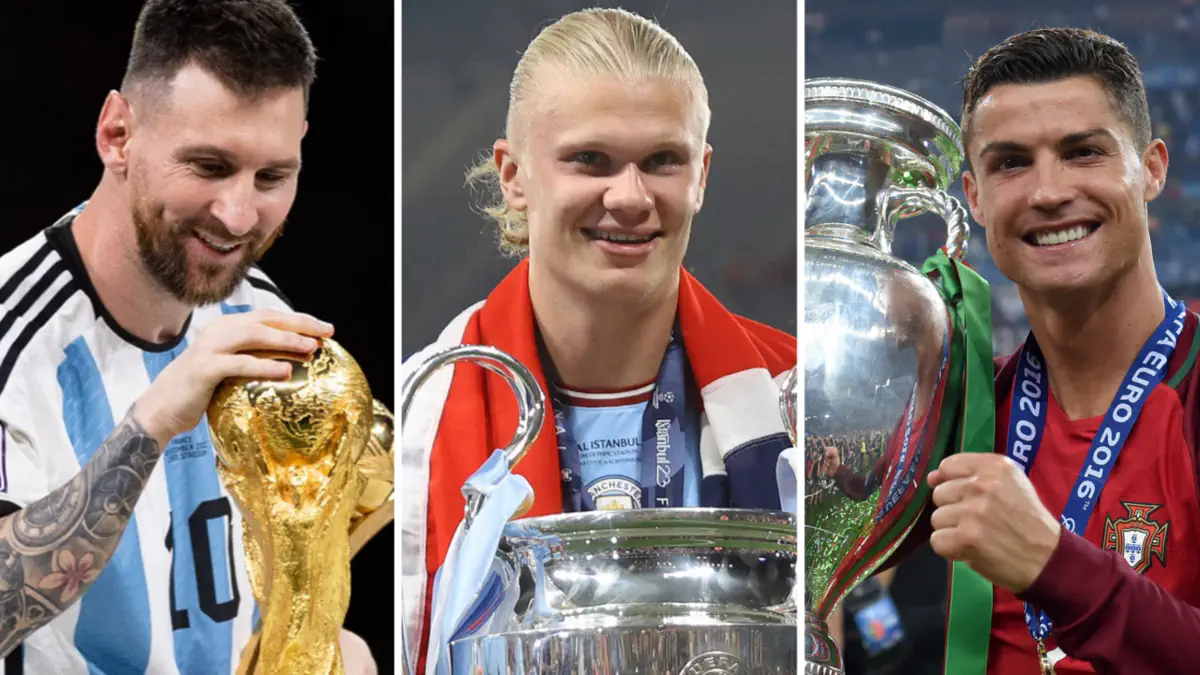
Haaland Messi Ronaldo comparisons have dominated talk about who is the best, both now and in the long arc of football history. In an interview published by The Football Faithful, Erling Haaland stated that he is far off the levels Messi and Ronaldo reached. That explicit humility matters. It signals a mental approach focused on growth rather than resting on early career deeds. The piece arrives as City chase domestic and European glory, adding a fresh layer to the evolving debate around greatness in the modern era. The Haaland Messi Ronaldo comparisons conversation has been reframed not by bravado but by a measured view of achievement and trajectory.
The admission is not a retreat from ambition; rather, it is a deliberate framing of his legacy. Haaland has already rewritten numbers in the Premier League and in Europe, but he uses those records to sharpen his aim rather than to crown himself as the apex. He acknowledges the weight of the Messi-Ronaldo benchmark and the expectations that come with it—from fans, pundits, and teammates alike. This moment matters for how supporters will perceive every goal, every assist, and every trophy in the coming seasons. For a player who has built a reputation as a clinical finisher, the message is clear: excellence is a process, not a plateau.
City supporters will note that the humility is paired with a fierce work ethic. Haaland often talks about improving technique, decision-making, and consistency under big-match pressure. The external pressure from critics and critics-turned-analysts can be intense, but the interview suggests he intends to meet it with focus and discipline. In a sport where branding and narrative can outpace reality, Haaland’s candid stance keeps the Haaland Messi Ronaldo comparisons debate anchored in performance rather than bravado. For more context on his strategic mindset, see City’s official updates and interviews, such as Manchester City official communications.
With the backdrop of a possible era of dominance for Manchester City, the wider implications are subtle yet significant. Humility in public statements can sustain longevity. It reduces the risk of burnout from chasing an unattainable standard while still driving the hunger to win. The interview underscores a broader trend: modern stars are measured less by how loudly they proclaim greatness and more by the consistency of their output over time. That shift matters when fans compare eras, because the conversation moves from who is the greatest to who sustains greatness across peak years. Haaland’s stance is a warning to himself and a gift to supporters who want a more nuanced conversation about football greatness.
Key takeaway: Haaland Messi Ronaldo comparisons will continue to surface, but the emphasis is likely to move toward sustainable excellence. This first step of candid humility may help him avoid the fatigue that sometimes accompanies relentless comparisons. For those who want to follow the latest statements, this is a reminder to watch how he translates intent into results on the field, not just rhetoric off it. If you want deeper context, see BBC Sport for broader coverage on the Messi-Ronaldo benchmark in modern football.
The Messi-Ronaldo benchmark
The psychological weight of the benchmark
The Messi-Ronaldo benchmark is more than a tally of goals and trophies. It represents a cultural standard that shapes how teams, coaches, and players plan careers. The elite pair did not only score; they redefined expectations about longevity, peak performance, and leadership under pressure. When new talents emerge, fans ask not only whether they win titles but whether they can sustain elite influence across a generation. The Haaland Messi Ronaldo comparisons discourse is rooted in this psychology. The benchmark creates a ceiling that inspires some and intimidates others. As talent pools widen with analysts and data, the benchmark remains a powerful, almost mythic reference point that can elevate the sport’s narrative while complicating younger players’ paths to legend status.
Haaland’s own remarks add a modern twist to the debate. He frames his career as a journey with clear milestones, not a sprint toward surpassing a mythic standard. In practice, the impact is visible in how clubs market players and how pundits frame potential. The psychological pressure is real: fans expect a certain premium on consistency, impact in big games, and the ability to reinvent one’s game as opponents evolve. For a player like Haaland, who thrives on goal-scoring climate, the challenge is translating humility into sustained, high-impact performances that could, in time, redefine the conversation on what it means to reach Messi-Ronaldo-like greatness. For broader insights on how legacies are built, check out UEFA’s coverage of modern greats in Europe.
Haaland’s current trajectory
Goals, records, and modern performance
Haaland’s current trajectory remains one of the most scrutinized stories in world football. He has broken scoring records at a pace few players achieve, translating raw power and clinical finishing into a seemingly inexhaustible appetite for goals. The Haaland Messi Ronaldo comparisons become less about who he is compared to and more about whether he can sustain this level while expanding his influence beyond standard metrics. City features him as a central pillar in a squad designed to win both domestic titles and the European crown. His ability to adapt to different competitions, such as the Champions League, remains a critical barometer of whether the older benchmark can be surpassed on a structural level, not just in a single season.
Two elements define his trajectory: consistency and adaptability. He has shown that he can maintain elite output while adjusting to tactical shifts, injuries, and changing team dynamics. The numbers will continue to drive the narrative, but performance in decisive moments—late-season stretches, cup finals, and knockout games—will shape how fans measure the distance to Messi-Ronaldo-level greatness. While some critics argue that new generations will redefine benchmarks themselves, Haaland’s path suggests a model where greatness is earned through repeated excellence rather than a single season’s peak. City’s recruitment strategy underlines a long-term bet on his ability to deliver, as reflected in official club communications and press conferences that emphasize continuity and development.
In the broader context, Haaland’s trajectory is being watched by peers who aim to break through the Messi-Ronaldo era. The focus is shifting toward how much a player can influence the game’s tempo, tempo, and tactical evolution. For readers seeking comparative context, BBC Sport provides ongoing analysis of players who seek to redefine elite status in the modern game. As the season unfolds, supporters will be tracking not just goals but how Haaland’s approach to training, recovery, and teamwork shapes a legacy that transcends numbers.
Impact on expectations for Manchester City
Pressure, longevity, and narrative management
The Haaland Messi Ronaldo comparisons debate inevitably fuels expectations for Manchester City. The club’s fans and the broader football community expect him to deliver in big moments and win major trophies, including the European title. Haaland’s measured rhetoric could help balance those expectations, allowing fans to appreciate growth while avoiding the fatigue that comes from chasing an impossible standard. In practice, this means uniform performance across a season, with consistency in every competition City contest. The club’s strategy—relying on a central striker who can adapt to multiple formations—must remain flexible as opponents study him intensively.
City’s development in defense, midfield control, and goalkeeping is equally part of the equation. Haaland’s goal volume is a critical metric, but the team’s ability to maintain balance and defend deep into knockout rounds will shape his legacy as part of a trophy-winning era. The public narrative must evolve away from simple golden boot counts toward a holistic measure of influence—clutch moments, leadership in the locker room, and the ability to drive team performance in high-stakes matches. For an official perspective on City’s tactical framework, visit Manchester City official site.
The broader legacy debate in football
Defining the next generation of legends
Football’s legacy debate is evolving. The era of Messi and Ronaldo set a high bar for impact, branding, and longevity. The next generation—led by Haaland and peers like Mbappe and Vinícius Jr.—faces the challenge of carving out a unique identity while still operating within a global media ecosystem that magnifies every milestone. The Haaland Messi Ronaldo comparisons conversation will continue to surface, but the conversation is shifting toward how a player redefines greatness through sustained excellence, adaptability, and leadership. This shift matters for aspiring stars who must balance individuality with the team’s strategic aims.
Generational shifts are not merely about scoring records. They encompass influence on training cultures, tactical innovation, and the ability to inspire a new generation of fans and players. The modern football star must craft a narrative that travels beyond the pitch—through media, social outreach, and global marketing—without compromising performance. In that context, Haaland’s measured approach could become a model for future icons who wish to be evaluated on a broader spectrum than pure statistics. For readers who want to explore broader trend analysis, UEFA’s long-term study of greats offers useful context on how legacies are built in contemporary football.
- Haaland Messi Ronaldo comparisons will persist, but performance defines the legacy.
- Consistency across competitions is a stronger signal than peak seasons.
- Humility and continual improvement can extend a player’s career at the top level.
- Legacy is as much about influence and leadership as it is about goals.
In sum, Haaland’s candid framing could help shape a healthier, more nuanced dialogue about greatness. The conversation may shift from who is the greatest to how a player sustains excellence and how that contribution reshapes a club’s destiny. For ongoing updates and critiques of the legacy debate, keep an eye on reputable outlets like BBC Sport and UEFA as benchmarks for how the game measures greatness across eras.